Key Takeaways
- No clear winner for all tasks: Blind tests with 134 participants showed Claude winning 50% of rounds, Gemini 37.5%, and ChatGPT 12.5%—results vary heavily by prompt type and workflow.
- Claude leads on instruction precision: Best for legal work, compliance, and strict formatting needs; ChatGPT offers broader feature diversity including image/video generation; Gemini excels at multimodal research and Google Workspace integration.
- Pricing has converged: All three platforms now offer competitive subscription tiers ($20-25/month for pro plans), but token-based API costs and context window pricing differ significantly for power users.
- Ecosystem lock-in matters more than raw capability: Your choice should align with existing tools—Google Workspace users benefit most from Gemini, while developers invested in OpenAI plugins favor ChatGPT.
What Is It and Why It Matters
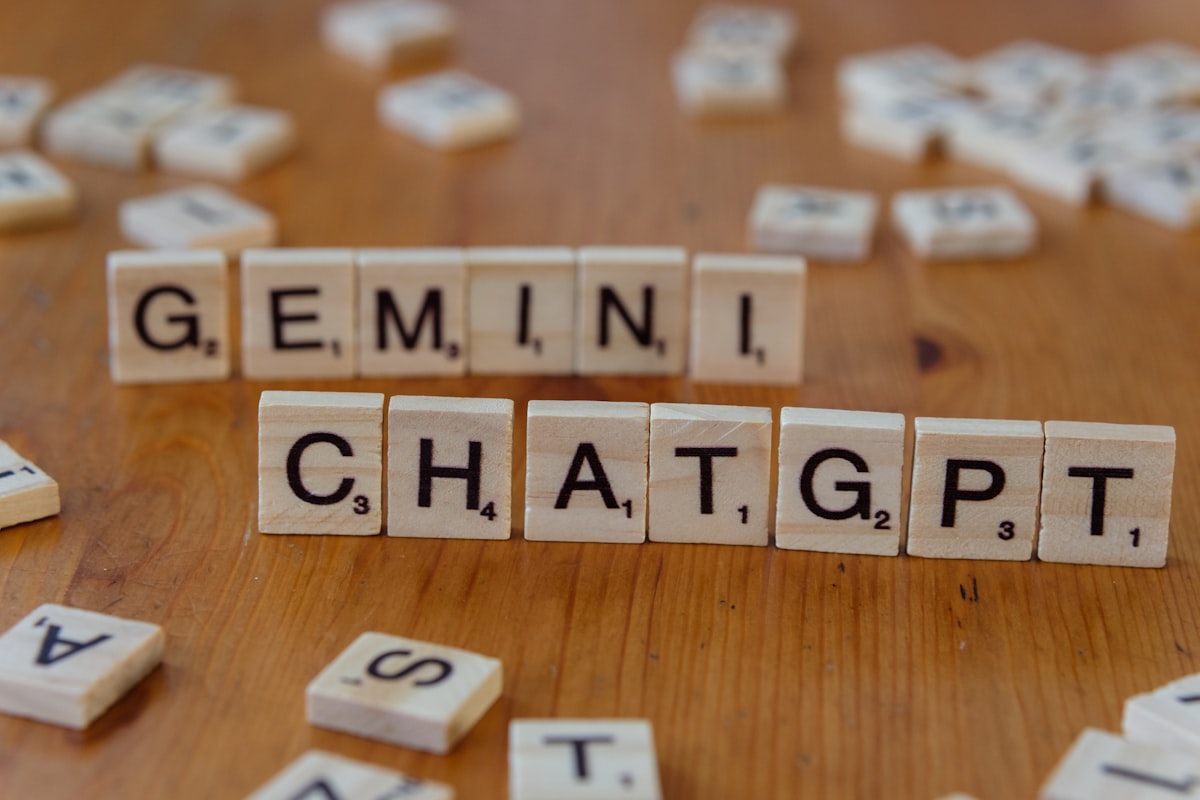
By early 2026, the AI assistant market has matured into a three-way race between ChatGPT (OpenAI’s GPT-5.x family), Claude (Anthropic’s Claude 4.x series including Opus and Sonnet), and Google’s Gemini platform, which now includes Spark-class frontier models within the Gemini 3.x architecture.
This comparison matters because the performance gap in general reasoning has essentially closed. Independent testing shows these models trade wins depending on task type, which means professionals can no longer rely on “pick the smartest model” as a selection strategy. Instead, the decision comes down to workflow alignment, ecosystem compatibility, multimodal requirements, and cost structure.
Target users include knowledge workers handling document analysis, software engineers building agent workflows, creative professionals needing multimodal generation, researchers requiring citation-backed synthesis, and enterprise teams evaluating platform lock-in risks. The stakes are meaningful: choosing the wrong platform can mean workflow friction, higher costs, or rebuilding integrations within months.
Key Features Breakdown
Multimodal Capabilities: Beyond Text
ChatGPT offers the broadest native feature set in 2026, with integrated DALL-E 3 image generation, video synthesis (limited to pro subscribers), voice conversations with ultra-low latency, and canvas-style collaborative editing. This makes it attractive for marketing teams and content creators who need everything in one subscription.
Gemini emphasizes analysis over generation—it excels at interpreting charts, images, video content, and PDFs with native Google Drive integration. For teams already using Google Workspace, the ability to analyze a spreadsheet, reference a Doc, and summarize a recorded Meet session in one prompt creates significant productivity gains. Gemini can generate images through integration with Imagen 3 but lacks native video creation.
Claude remains primarily text-focused, with document analysis (PDFs, text files) as its strongest multimodal feature. Anthropic has not prioritized image or video generation, which limits Claude for creative workflows but keeps the interface cleaner for analytical work. Claude’s strength is in understanding what you upload, not creating new media.
Real-world impact: A design agency likely needs ChatGPT’s generation suite. A law firm analyzing 200-page contracts benefits more from Claude’s document precision. A research team pulling insights from academic PDFs, data visualizations, and video lectures will find Gemini’s analysis depth most valuable.
Instruction Following and Structured Output
Claude 4.x (particularly Opus) consistently ranks highest for strict instruction adherence in practitioner reviews. When a prompt contains multiple constraints—”rewrite this in formal tone, preserve all bullet points, add citations in APA format, limit to 500 words”—Claude reliably delivers on all requirements without selective interpretation.
ChatGPT has improved significantly through custom GPTs and structured output modes but still occasionally “simplifies” complex instructions or drops constraints in multi-step tasks. Power users mitigate this through prompt engineering and agent frameworks.
Gemini falls between the two, with strong performance on analytical instructions but occasional over-explanation when conciseness is requested.
Practical consequence: For compliance documentation, legal briefs, technical specifications, or any domain where deviation from instructions creates liability, Claude is the safer choice. For exploratory work where creative interpretation adds value, the differences matter less.
Long-Context Handling
All three platforms support 200K+ token context windows in their premium tiers by 2026, but behavior differs:
Claude is most frequently praised for maintaining coherence and accuracy across extremely long documents. Users report it “doesn’t lose the thread” when working with 100-page policy manuals or complex codebases.
Gemini handles long context well, especially when documents include mixed media (text + images + tables), where its multimodal architecture provides an advantage.
ChatGPT supports long context but shows more variability—some users report it performs better with chunked inputs and explicit references rather than relying on full-document recall.
The practical difference emerges in workflows like contract review (Claude wins), multi-source research synthesis (Gemini’s Deep Research mode excels), and ongoing conversation threads that span days (ChatGPT’s memory features help compensate for context limits).
Agent Capabilities and Automation
ChatGPT leads in agentic workflows through custom GPTs (shareable, pre-configured assistants with specific instructions and knowledge bases), Actions (API integrations), and computer-use prototypes that can interact with web interfaces. This makes it powerful for workflow automation and internal tooling.
Gemini offers agent-style features through deep integrations with Google services—automatically scheduling based on calendar availability, pulling data from Sheets, or summarizing email threads. These work seamlessly but only within the Google ecosystem.
Claude has taken a more cautious approach to autonomy, focusing on reliable execution of user-defined tasks rather than open-ended agent behavior. Computer-use features are available but less promoted than OpenAI’s equivalents.
For enterprise teams building custom automation, ChatGPT’s extensibility is strongest. For teams already embedded in Google Workspace, Gemini’s native integrations require less configuration. For regulated industries wary of autonomous AI actions, Claude’s conservative stance is an advantage.
Pricing
Subscription Plans
| Platform | Free Tier | Pro/Plus Tier | Enterprise |
|---|---|---|---|
| ChatGPT | GPT-4o mini, limited messages | $20/month (GPT-5 access, DALL-E, voice) | Custom pricing |
| Claude | Claude 4 Haiku, rate-limited | $20/month (Opus access, 5x usage) | Custom (includes compliance features) |
| Gemini | Gemini 1.5 Flash | $20-25/month (Spark/Advanced, Workspace integration) | Google One AI Premium tiers |
All three platforms have converged on similar consumer pricing, making free tier limitations and API costs more important differentiators.
API and Token Costs
For developers and power users building custom applications:
- Claude 4 Opus API: ~$15 per million input tokens, $75 per million output tokens
- GPT-5 API: ~$10-20 per million tokens (varies by model variant)
- Gemini 3.x API: ~$7-15 per million tokens, with preferential pricing for Google Cloud customers
Long-context usage adds surcharges on all platforms. Teams processing hundreds of documents daily should calculate actual monthly costs based on average token counts rather than assuming subscription pricing covers everything.
Value Assessment
For individual professionals needing one general-purpose assistant, all three $20/month subscriptions deliver strong value—the choice comes down to feature priorities.
For API-heavy usage (customer service bots, document processing pipelines, research automation), Gemini often delivers the best cost-per-token ratio, especially with Google Cloud committed use discounts.
For teams needing strong compliance logging, audit trails, and data residency controls, Claude’s enterprise tier includes features that would require custom implementation on other platforms.
Comparison Table
| Feature | ChatGPT (GPT-5) | Claude 4 (Opus) | Gemini (Spark/3.x) |
|---|---|---|---|
| Best for | Broad feature needs, content creation | Precision work, compliance, long docs | Research, multimodal analysis, Google users |
| Instruction following | Good (better with custom GPTs) | Excellent (industry-leading) | Good (occasionally verbose) |
| Image generation | Yes (DALL-E 3 native) | No | Yes (Imagen 3 integration) |
| Video generation | Limited (Pro tier) | No | No |
| Long-context reliability | Moderate (200K tokens) | Excellent (200K tokens) | Good (1M+ token support) |
| API cost (per 1M tokens) | $10-20 | $15-75 (input-output) | $7-15 |
| Ecosystem strength | OpenAI plugins, custom GPTs | Standalone, some integrations | Deep Google Workspace integration |
| Computer use / agents | Strong (Actions, GPTs) | Conservative approach | Google-service focused |
| Free tier quality | Moderate (GPT-4o mini) | Good (Haiku) | Good (Flash) |
Who Should Use This
Choose ChatGPT if you:
- Need image/video generation alongside text work
- Want the broadest feature set in a single subscription
- Are building custom GPTs or workflow automation
- Value extensive third-party integrations and plugins
- Work in marketing, content creation, or education
Choose Claude if you:
- Handle sensitive documents requiring strict instruction following
- Work in legal, compliance, healthcare, or regulated industries
- Process long, complex documents regularly (contracts, research papers)
- Prioritize consistent, predictable behavior over feature variety
- Need detailed reasoning explanations and careful output
Choose Gemini if you:
- Already use Google Workspace extensively (Docs, Sheets, Meet, Drive)
- Perform multimodal research (analyzing videos, images, charts together)
- Need cost-effective API access at scale
- Value citation-backed research with Deep Research mode
- Want strong performance without learning a new ecosystem
Avoid these tools if:
- All three: You need guaranteed factual accuracy without verification (all still hallucinate occasionally)
- ChatGPT: You’re in a highly regulated environment uncomfortable with OpenAI’s content policy evolution
- Claude: You need native image generation or voice interaction
- Gemini: You avoid Google services due to privacy concerns or vendor lock-in risk
FAQ
Q: Can I use all three platforms without paying?
Yes, but with significant limitations. All three offer free tiers that provide access to capable models (GPT-4o mini, Claude Haiku, Gemini Flash), but with strict rate limits—typically 10-40 messages per day depending on prompt length. Free tiers lack advanced features like image generation, extended context, and priority access during peak times. For professionals using AI daily, free tiers become restrictive within a week.
Q: Which model is actually “smartest” in 2026?
The question no longer has a meaningful answer. Blind testing shows that Claude, ChatGPT, and Gemini trade wins depending on task type, with Claude winning ~50% of instruction-following challenges, Gemini excelling at analytical reasoning, and ChatGPT performing well on creative tasks. Performance variability within a single model (based on prompt phrasing) often exceeds differences between models. Choose based on workflow needs, not abstract “intelligence” rankings.
Q: How do these compare for coding assistance?
All three are capable coding assistants, but specialization differs: ChatGPT offers the broadest language support and integration with development tools through custom GPTs. Claude is frequently praised by senior developers for understanding complex refactoring instructions and maintaining code style consistency. Gemini integrates well with Google Colab and Firebase workflows. For most developers, the differences are less important than whether you prefer working in an IDE with Copilot or in a chat interface—all three models power various code-completion tools anyway.
Verdict
There is no universal best choice in 2026—and that’s actually good news for professionals, because it means you can optimize for your specific workflow rather than settling for a one-size-fits-all compromise.
Choose Claude if your work demands precision, involves sensitive documents, or requires strict compliance with complex instructions. It’s the safest choice for legal, medical, financial, and regulatory contexts where mistakes have consequences.
Choose ChatGPT if you value feature breadth, create multimedia content, or need extensive customization through GPTs and plugins. It’s the most versatile platform for teams with diverse needs and users who want everything in one subscription.
Choose Gemini if you live in Google Workspace, perform research-intensive work with mixed media sources, or need cost-effective API access at scale. It delivers the best value for analytical workflows already embedded in the Google ecosystem.
For teams with budget flexibility, the optimal solution is often keeping subscriptions to two platforms: Claude for high-stakes precision work and either ChatGPT or Gemini for daily productivity tasks. The $40/month cost is justified by workflow insurance—using the right tool for each task rather than forcing one model to handle everything.
The frontier model race is no longer about which AI is “winning.” It’s about which combination of capabilities, ecosystem integration, and pricing structure fits your work. Evaluate a free trial of each platform with your actual tasks before committing.